
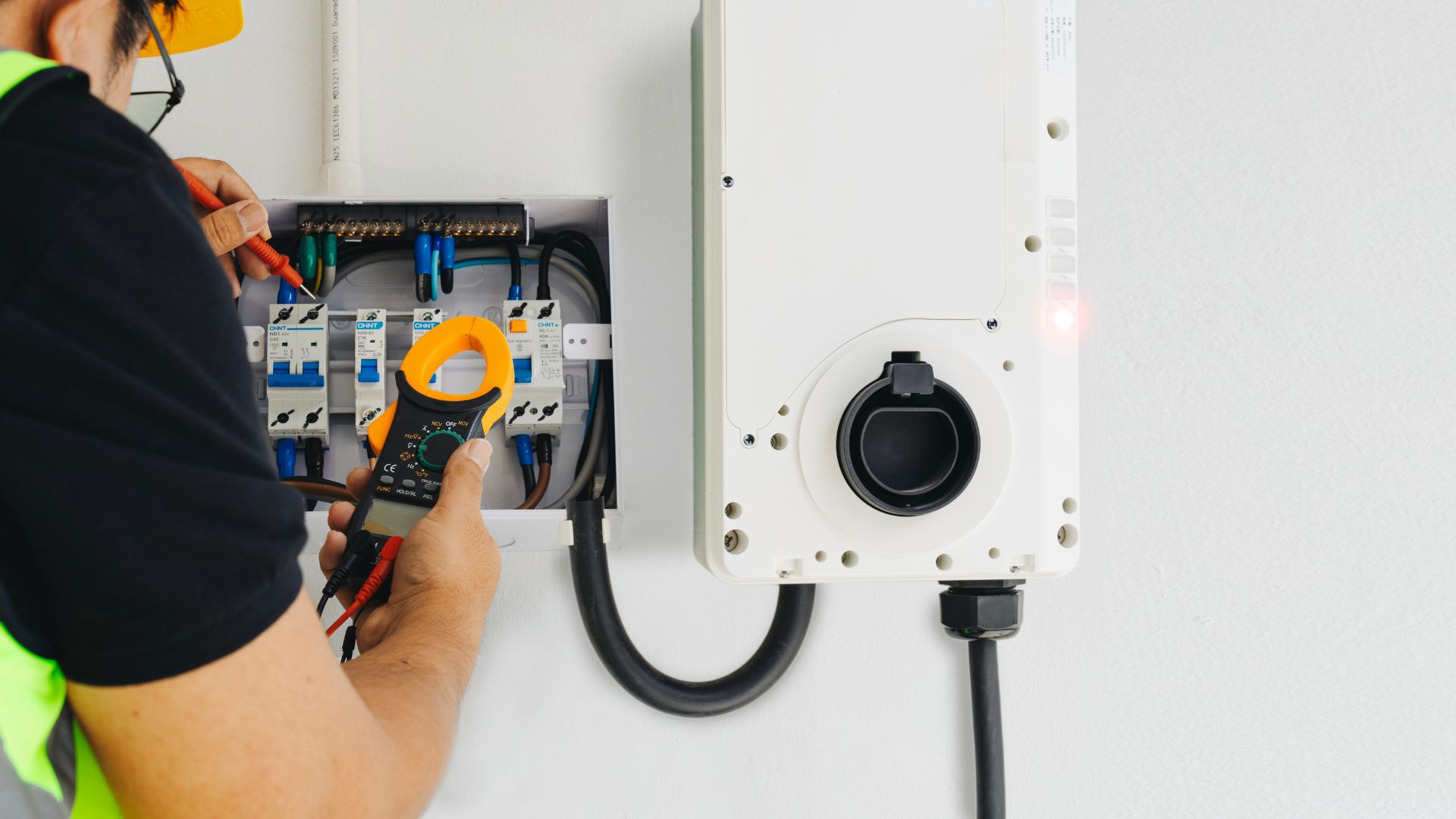
When commercial property owners begin planning EV charging infrastructure, much of the conversation naturally focuses on charging stations, parking spaces, and installation costs.
Yet one of the most important decisions often happens long before equipment is selected.
Can the property’s electrical infrastructure support EV charging?
The answer affects nearly every aspect of the project—from budget and construction timelines to expansion opportunities and long-term operating costs.
Understanding your property’s electrical capacity early helps avoid costly surprises and provides a clearer path toward selecting the right charging solution.
Why Electrical Capacity Matters
Electric vehicle charging requires electricity—and in many commercial properties, adding multiple charging stations can significantly increase electrical demand.
That doesn’t mean every property needs major electrical upgrades.
It does mean every property should understand its existing electrical infrastructure before moving forward.
Evaluating electrical capacity early helps answer questions such as:
- Can the existing electrical service support charging?
- Will utility upgrades be required?
- Is there room for future expansion?
- Would phased implementation make sense?
- Should alternative charging solutions be evaluated?
These questions help owners make informed investment decisions rather than reacting to unexpected construction requirements later.
Understanding Your Property’s Electrical System
Commercial electrical systems consist of several components that work together to distribute power throughout the property.
Understanding these components helps owners have more productive conversations with engineers, contractors, and property managers.
Utility Service
Every commercial property receives electrical service from its utility provider.
The size of that service determines how much electricity is available for building operations.
One of the first planning steps is determining whether existing service can support additional EV charging demand.
Main Electrical Panels
Electrical panels distribute power throughout the building.
Available capacity within these panels may influence how charging infrastructure is connected.
In some situations, panel upgrades may be necessary before additional charging stations can be installed.
Transformers
Transformers regulate and distribute electrical power across the property.
If anticipated charging demand exceeds available transformer capacity, additional infrastructure may be required.
Understanding transformer capacity early helps establish realistic project expectations.
Switchgear
Switchgear controls how electricity is distributed throughout commercial buildings.
Depending on the property’s existing infrastructure, modifications may be necessary to accommodate additional charging loads.
Conduit and Distribution
Power must reach each charging station safely and efficiently.
Existing conduit routes, underground utilities, and distribution pathways all influence installation complexity and construction costs.
Evaluating these conditions before design work begins often simplifies the project.
Questions Property Owners Should Ask
Electrical planning isn’t just about understanding equipment.
It’s about understanding how the property functions today—and how it may need to function tomorrow.
Consider questions such as:
- How much unused electrical capacity is currently available?
- Are major electrical upgrades already planned?
- Could charging be incorporated into future capital projects?
- Is the property’s electrical system nearing capacity?
- Would future tenant improvements increase demand?
- Could phased implementation reduce costs?
These discussions help owners evaluate multiple options before making significant investments.
Planning for Growth
Commercial EV charging demand rarely remains static.
What begins as two charging stations today may become eight or twelve over the next several years.
Planning for that growth during the initial project often saves both time and money.
Examples include:
- Installing larger conduit during parking lot improvements
- Reserving electrical space for future expansion
- Designing parking layouts with additional charging locations in mind
- Coordinating charging with future building improvements
Preparing today helps reduce future disruption.
Electrical Capacity Is Only One Part of the Equation
Although electrical infrastructure is critical, it should never be evaluated in isolation.
Successful planning also considers:
- Property operations
- Parking availability
- User demand
- Sustainability goals
- Budget
- Maintenance
- Future flexibility
Looking at the entire property—not just the electrical system—creates stronger long-term decisions.
The Role of Commercial Property Management
Commercial property managers bring valuable operational insight to electrical infrastructure planning.
Because they understand how the building functions every day, they help coordinate electrical improvements with:
- Preventive maintenance schedules
- Tenant communication
- Capital planning
- Vendor coordination
- Parking operations
- Construction sequencing
This broader perspective helps minimize disruption while supporting the property’s long-term performance.
Clear Blue Commercial’s Approach
At Clear Blue Commercial, we believe electrical planning is one of the most important parts of a successful EV charging project.
Rather than beginning with equipment recommendations, we begin by understanding the property.
We evaluate how the existing infrastructure supports current operations while considering future growth, sustainability goals, and long-term asset management.
This planning-first approach helps property owners make confident decisions that support both today’s needs and tomorrow’s opportunities.
Conclusion
Electrical capacity may not be the most visible part of a commercial EV charging project, but it is one of the most important.
Understanding your property’s electrical infrastructure before selecting charging equipment creates a stronger foundation for every decision that follows.
Thoughtful planning reduces surprises, supports future growth, and helps ensure charging infrastructure becomes a valuable long-term investment rather than an unexpected challenge.