
Commercial EV Charging Infrastructure
Helping Commercial Property Owners Prepare for the Next Generation of Transportation
Introduction
Electric vehicles are rapidly becoming part of everyday life throughout California. As adoption continues to grow, commercial property owners are beginning to evaluate how EV charging fits into their long-term property strategy.
For some properties, EV charging may become an important tenant amenity. For others, it may support employees, customers, fleet vehicles, municipalities, or future development plans. The right solution depends on the property’s unique goals, infrastructure, and long-term vision.
Installing charging stations is only one piece of the process.
Successful commercial EV charging projects begin with thoughtful planning—evaluating electrical capacity, parking layout, future expansion, operating costs, and how charging infrastructure supports the overall performance of the property.
Whether you own an office building, retail center, industrial facility, healthcare campus, hospitality property, educational institution, or mixed-use development, understanding today’s planning decisions can help protect tomorrow’s investment.

Commercial EV charging is becoming an important consideration for many California commercial property owners. Successful projects begin with planning—not equipment selection.
Every property has unique infrastructure requirements based on its electrical capacity, parking configuration, tenant needs, operational goals, and long-term development strategy. Both grid-connected and off-grid charging solutions offer advantages depending on the property and its objectives.
Understanding these factors today helps owners make informed investment decisions that support both current operations and future growth.
Why Read This?
Commercial real estate is entering a new phase of infrastructure planning.
Just as owners evaluate roofing systems, HVAC equipment, elevators, lighting, and capital improvements, EV charging is becoming another consideration in long-term property management.
Several factors are driving this shift.
Electric vehicle ownership continues to increase throughout California.
Businesses are incorporating sustainability goals into their operations.
Commercial fleets are beginning to transition toward electric vehicles.
Employees increasingly expect workplace charging options.
Customers appreciate convenient charging while they shop, dine, or conduct business.
Municipalities continue investing in transportation infrastructure while supporting broader environmental initiatives.
These changes do not mean every commercial property should immediately install charging stations.
They do mean every commercial property owner should understand how EV charging could influence future planning.
Waiting until demand becomes urgent often limits available options.
Planning ahead provides greater flexibility, better budgeting, and a clearer understanding of how charging infrastructure fits within broader property goals.
California EV Infrastructure Snapshot
California continues to lead the nation in electric vehicle adoption, making commercial EV charging an increasingly important consideration across virtually every commercial property sector.
Rather than asking whether EV charging will influence commercial real estate, many owners are now asking when—and how—it will affect their specific properties.
Commercial Markets
Different property types have different charging needs.
Office Buildings
Employees increasingly value workplace charging as an amenity, while employers view it as part of broader sustainability and recruitment initiatives.
Industrial Properties
Industrial facilities are evaluating charging for delivery vehicles, service fleets, employee parking, and future logistics operations.
Retail Centers
Retail properties may use EV charging to encourage longer customer visits while supporting evolving consumer expectations.
Healthcare Facilities
Hospitals and medical campuses serve employees, patients, physicians, and visitors with varying charging needs throughout the day.
Hospitality
Hotels continue exploring EV charging as an amenity that supports guest convenience while remaining competitive in the hospitality market.
Municipal Properties
Municipalities are expanding charging infrastructure to support public fleets, employees, visitors, and community sustainability objectives.
Educational Campuses
Schools, colleges, and universities are evaluating charging for faculty, staff, students, visitors, and campus operations.
Mixed-Use Developments
Mixed-use projects often require flexible charging strategies that serve multiple user groups within a single property.
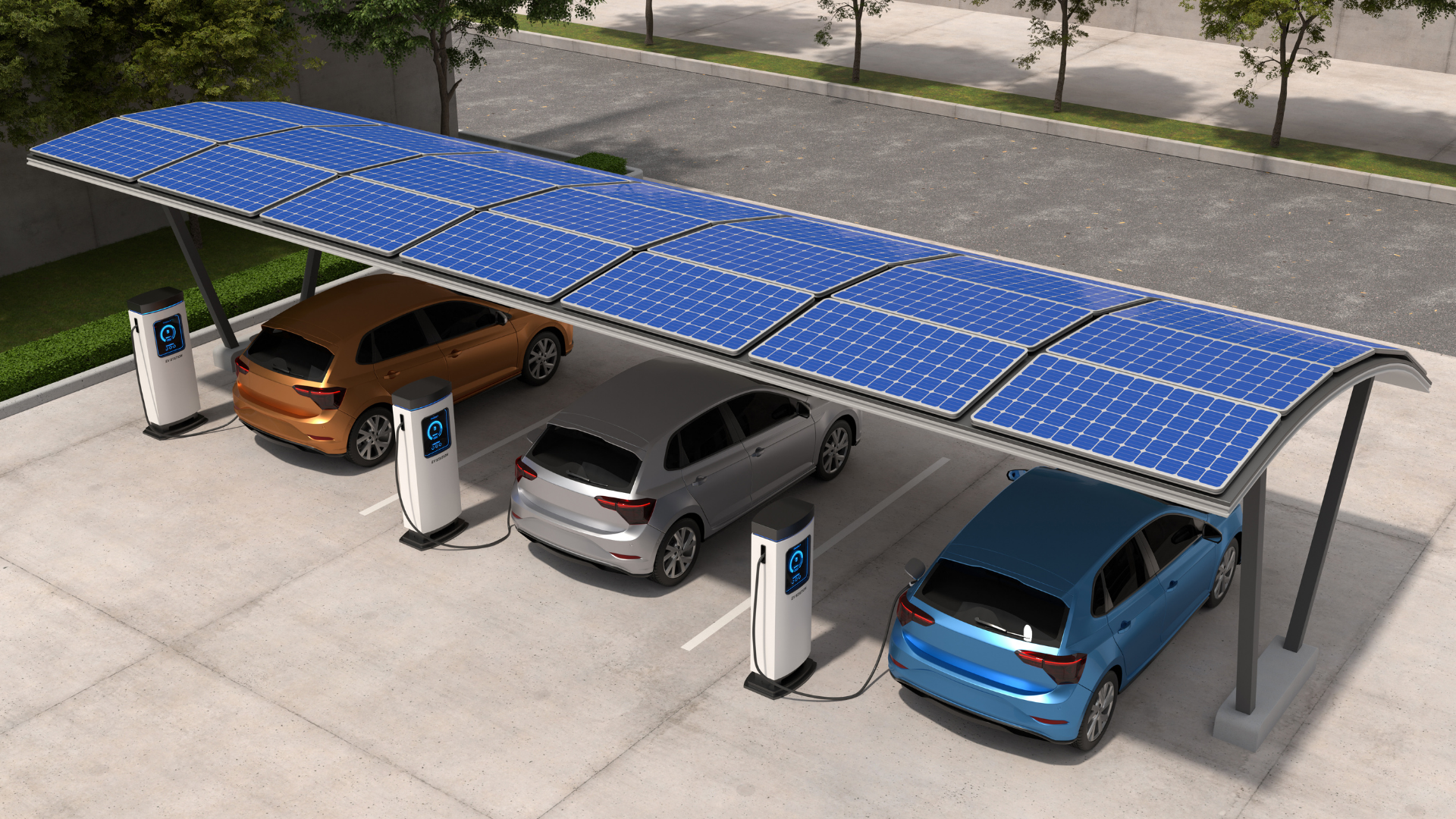
EV Growth Drivers
Several long-term trends continue influencing commercial EV infrastructure planning throughout California.
- Increasing electric vehicle ownership
- State policies supporting transportation electrification
- Corporate sustainability initiatives
- Fleet electrification
- Population growth
- Commercial development
- Infrastructure investment by municipalities and utilities
- Changing employee and customer expectations
These factors vary by region and property type, reinforcing the importance of planning based on each property’s specific circumstances.
Property Owner Priorities
Commercial property owners evaluating EV charging often focus on several key questions.
- Does the property have adequate electrical capacity?
- How will charging affect parking availability?
- Should installation occur as part of a larger capital improvement plan?
- Will charging enhance tenant amenities?
- How does charging support sustainability goals?
- What are the long-term operating costs?
- Can the system be expanded as future demand grows?
These questions should be addressed before selecting equipment or beginning construction.
Planning Considerations
Effective EV charging planning involves much more than choosing charging stations.
Owners should evaluate:
- Existing utility capacity
- Site layout
- Parking design
- Solar opportunities
- Battery storage
- Future expansion
- Capital planning
- Overall asset management strategy
When these factors are considered together, charging infrastructure becomes part of a broader long-term property strategy rather than a stand-alone project.

Key Takeaways
Planning
Successful EV charging projects begin with understanding property goals before selecting equipment.
Infrastructure
Every property has unique infrastructure requirements that influence charging options.
Electrical Capacity
Evaluating existing electrical systems early helps avoid costly surprises later.
Property Strategy
Charging infrastructure should support broader asset management and capital planning objectives.
Future Growth
Planning for future expansion today often reduces costs and simplifies future development.
Commercial EV Charging Is Changing Commercial Real Estate
Commercial EV charging is no longer viewed as a specialized amenity for a small segment of drivers. It is becoming part of how commercial properties are planned, modernized, and positioned for the future.
Just as high-speed internet, energy-efficient building systems, and modern security technologies have become expected features of commercial properties, EV charging is steadily becoming part of the conversation when owners evaluate long-term property improvements.
The shift isn’t happening because every property needs charging today.
It’s happening because transportation is changing, and commercial properties need the flexibility to adapt as demand evolves.
Forward-thinking commercial property owners are asking strategic questions:
- How might EV charging support our tenants?
- Will employees expect workplace charging?
- Could charging encourage customers to spend more time on-site?
- Will future fleet vehicles require charging infrastructure?
- How will municipalities influence transportation planning?
- Should charging be incorporated into future capital improvement projects?
These questions reflect a broader change in commercial real estate. Properties are no longer evaluated solely on today’s operational needs. Increasingly, they are evaluated on how well they are positioned for tomorrow.
Modern Infrastructure
Today’s commercial buildings are expected to support evolving technologies and changing business needs.
EV charging joins a growing list of infrastructure investments that contribute to long-term property competitiveness, alongside fiber connectivity, energy management systems, building automation, and modern security technologies.

Employee Charging
Many employers are exploring workplace charging as part of employee recruitment, retention, and sustainability initiatives.
As electric vehicle ownership increases, convenient charging may become an increasingly valued workplace amenity.
Customer Charging
Retail centers, restaurants, entertainment venues, and hospitality properties may view charging as another way to enhance the customer experience.
While customers charge their vehicles, they often spend additional time shopping, dining, or utilizing nearby services.
Fleet Vehicles
Commercial fleets are gradually transitioning toward electric vehicles across many industries.
Properties that support fleet operations may eventually require charging infrastructure as part of normal business operations.
Municipal Charging
Municipalities throughout California continue expanding charging infrastructure to support employees, public fleets, visitors, and broader transportation initiatives.
Commercial property owners often benefit from understanding how local infrastructure planning may influence future opportunities.
Commercial Development
New developments increasingly evaluate EV charging during the design phase rather than treating it as a future retrofit.
Planning early often provides greater flexibility while reducing future construction costs.
Commercial EV Charging Starts with Planning
One of the most common misconceptions about commercial EV charging is that the first decision involves selecting charging equipment.
In reality, equipment selection should come much later in the process.
Successful commercial EV charging projects begin by understanding the property itself.
Every property has unique operating requirements, physical constraints, and long-term objectives that influence infrastructure decisions.
The goal is not simply to install charging stations.
The goal is to develop a charging strategy that supports the property’s long-term success.
Property Use
The first question is straightforward:
How is the property used?
Office buildings, retail centers, industrial facilities, healthcare campuses, hotels, educational institutions, municipalities, and mixed-use developments each have very different charging requirements.
Understanding how people use the property establishes the foundation for every decision that follows.
Tenant Needs
Charging should support the people who use the property.
Owners should consider current tenant needs while also anticipating how those needs may evolve over time.
Not every tenant will require charging today.
That doesn’t mean future tenants won’t.
Parking
Parking configuration influences charger placement, traffic flow, accessibility, and future expansion opportunities.
Thoughtful site planning helps maximize both convenience and operational efficiency.
Electrical Capacity
Existing electrical infrastructure often determines what charging options are practical.
Evaluating electrical capacity early allows owners to understand whether upgrades may be required before installation.
Future Demand
One of the biggest planning mistakes is designing only for today’s demand.
Commercial properties often benefit from infrastructure that allows charging capacity to expand over time.
Planning for future growth during the initial project can significantly reduce future construction costs.

Expansion
Charging needs rarely remain static.
Owners should evaluate how additional charging stations could be incorporated as adoption increases.
Accessibility
Charging stations should support accessibility requirements while integrating naturally into the property’s parking design.
Thoughtful planning helps ensure both convenience and compliance.
Site Design
Successful charging installations consider more than electrical equipment.
Landscape design.
Lighting.
Pedestrian access.
Vehicle circulation.
Security.
Drainage.
Future maintenance.
All contribute to a successful long-term installation.
Every Commercial Property Has Different Needs
No two commercial properties are identical.
The right EV charging strategy depends on how the property operates, who uses it, and how owners envision its future.
Rather than applying a one-size-fits-all solution, commercial property owners should evaluate charging within the context of their specific property type.
Office Buildings
Workplace charging may support employee satisfaction, recruitment, and corporate sustainability initiatives.
Office environments often benefit from charging sessions that occur throughout the workday.
Retail Centers
Retail charging strategies often focus on customer convenience while encouraging longer visits to shopping centers and commercial districts.
Hotels
Hospitality properties increasingly evaluate charging as a guest amenity that complements overnight stays and enhances the visitor experience.
Industrial Facilities
Industrial properties frequently assess charging for employee parking, service vehicles, logistics operations, and fleet electrification.
Healthcare
Hospitals and medical campuses may serve employees, patients, physicians, and visitors whose charging needs vary throughout the day.
Municipal Properties
Municipal facilities often support public fleets while serving employees and community visitors.
Infrastructure planning frequently aligns with broader municipal sustainability goals.
Educational Campuses
Schools, colleges, and universities often require flexible charging strategies that accommodate faculty, staff, students, and campus operations.
Business Parks
Business parks serving multiple tenants may require scalable charging solutions capable of adapting as occupancy and transportation needs evolve.
Commercial EV Charging Supports More Than Sustainability
Many discussions about EV charging begin with sustainability.
While environmental responsibility remains an important consideration, commercial property owners often discover that charging infrastructure provides broader business benefits as well.
Thoughtfully planned charging may contribute to:
- Enhanced tenant amenities
- Improved customer experiences
- Future fleet readiness
- Increased property competitiveness
- Long-term capital planning
- Modern infrastructure
- Support for corporate sustainability initiatives
When evaluated strategically, EV charging becomes another component of thoughtful asset management rather than simply an environmental project.
Why Commercial Property Owners Are Thinking Further Ahead
Commercial property improvements often occur over many years.
Parking lots are resurfaced.
Electrical systems are upgraded.
Tenant improvements are completed.
Capital projects are scheduled.
Modernization occurs in phases.
Because these projects already require planning and investment, many owners are evaluating whether EV charging infrastructure should be incorporated at the same time.
Planning ahead often reduces future disruption while creating opportunities for more efficient construction and budgeting.
Waiting until charging becomes an urgent need may require additional design work, utility coordination, and construction that could have been addressed during earlier improvement projects.
Future-ready commercial properties rarely become future-ready overnight.
They evolve through thoughtful planning.
EV Charging Is Becoming Part of Commercial Property Management
Commercial property management has always involved balancing operational performance with long-term investment strategy.
As EV adoption continues to grow, charging infrastructure is becoming another consideration within that broader management responsibility.
Property managers increasingly evaluate:
- Parking operations
- Electrical infrastructure
- Facility maintenance
- Capital planning
- Tenant amenities
- Vendor coordination
- Long-term asset value
Rather than viewing EV charging as a separate initiative, many owners are integrating it into ongoing property planning alongside other building improvements.
Commercial EV charging is not replacing traditional property management.
It is becoming another tool that supports modern commercial properties and helps owners prepare for future transportation needs.
Grid-Connected vs. Off-Grid EV Charging
One of the first questions commercial property owners ask is:
“Should we install a traditional grid-connected charging system, or should we consider an off-grid solution?”
There isn’t a single answer that works for every property.
The right approach depends on factors such as electrical capacity, site conditions, construction costs, charging demand, long-term operating goals, and future expansion plans.
Understanding the advantages and considerations of each approach helps property owners make informed decisions that align with their investment strategy.
| Grid-Connected EV Charging | Off-Grid EV Charging |
| Connects directly to the utility electrical grid | Produces power on-site using solar energy with battery storage |
| Often works well where electrical capacity already exists | Can reduce or eliminate the need for major utility upgrades |
| Familiar permitting and installation process | Minimal site disruption at many locations |
| Can support a wide range of charger types | Ideal where trenching or utility upgrades are difficult or costly |
| Good choice for many existing developments | Scalable for future expansion |
| May require transformer, switchgear, or service upgrades | Reduces dependence on utility infrastructure |
Benefits of Grid-Connected Charging
For many commercial properties, a traditional grid-connected installation is the most practical solution.
Benefits may include:
- Established utility infrastructure
- Familiar engineering and permitting process
- Flexible charger selection
- Integration with existing electrical systems
- Suitable for many office, retail, industrial, and mixed-use properties
Considerations
Owners should also evaluate:
- Available electrical capacity
- Utility upgrade requirements
- Transformer availability
- Construction timelines
- Trenching requirements
- Long-term electrical demand
Battery Storage
Battery storage allows energy produced during daylight hours to be stored and delivered when charging demand occurs.
This helps improve system reliability while supporting consistent charging availability.
Solar Tracking
Unlike fixed solar arrays, solar tracking technology follows the movement of the sun throughout the day.
This allows panels to capture more available sunlight and increase energy production compared with traditional fixed-position systems.
Best Applications
Off-grid solutions may be appropriate for:
- Large parking lots
- Corporate campuses
- Municipal properties
- Remote facilities
- Fleet charging
- Properties with limited electrical capacity
- Sites where utility upgrades would be expensive or time-consuming
Planning Considerations
As with any infrastructure investment, owners should evaluate:
- Property goals
- Daily charging demand
- Available parking
- Solar exposure
- Future expansion
- Long-term operating strategy
The objective is not to determine which technology is universally better.
It is to determine which solution is best for a specific property.
Why Electrical Capacity Matters
One of the most important—and often overlooked—parts of commercial EV charging planning is understanding the property’s existing electrical infrastructure.
Many owners assume charging stations can simply be added wherever parking is available.
In reality, the available electrical capacity often determines what is possible.
Installing EV charging without first evaluating electrical infrastructure can lead to unexpected costs, construction delays, and redesigns.
That’s why electrical planning should occur early in the decision-making process.
Key Components
Utility Service
The first step is understanding how much electrical service currently reaches the property.
Some buildings already have sufficient capacity.
Others may require additional service from the utility provider.
Transformers
Transformers distribute electrical power throughout a property.
If additional charging demand exceeds available transformer capacity, upgrades may be necessary.
Switchgear
Switchgear controls and distributes electricity within the building.
Existing equipment may require evaluation before significant charging loads are added.
Conduit and Distribution
Installing charging stations often requires underground conduit, wiring, and distribution infrastructure.
The location of existing utilities influences installation complexity and cost.
Utility Studies
Many commercial projects begin with an electrical assessment to determine available capacity and identify potential upgrade requirements.
These studies help owners understand options before construction begins.
Construction Planning
Electrical upgrades can influence:
- Construction schedules
- Budgeting
- Parking availability
- Utility coordination
- Future expansion opportunities
Planning ahead helps reduce surprises later in the project.
How Off-Grid EV Charging Works
Traditional charging stations rely on electricity delivered through the utility grid.
Off-grid charging follows a different model.
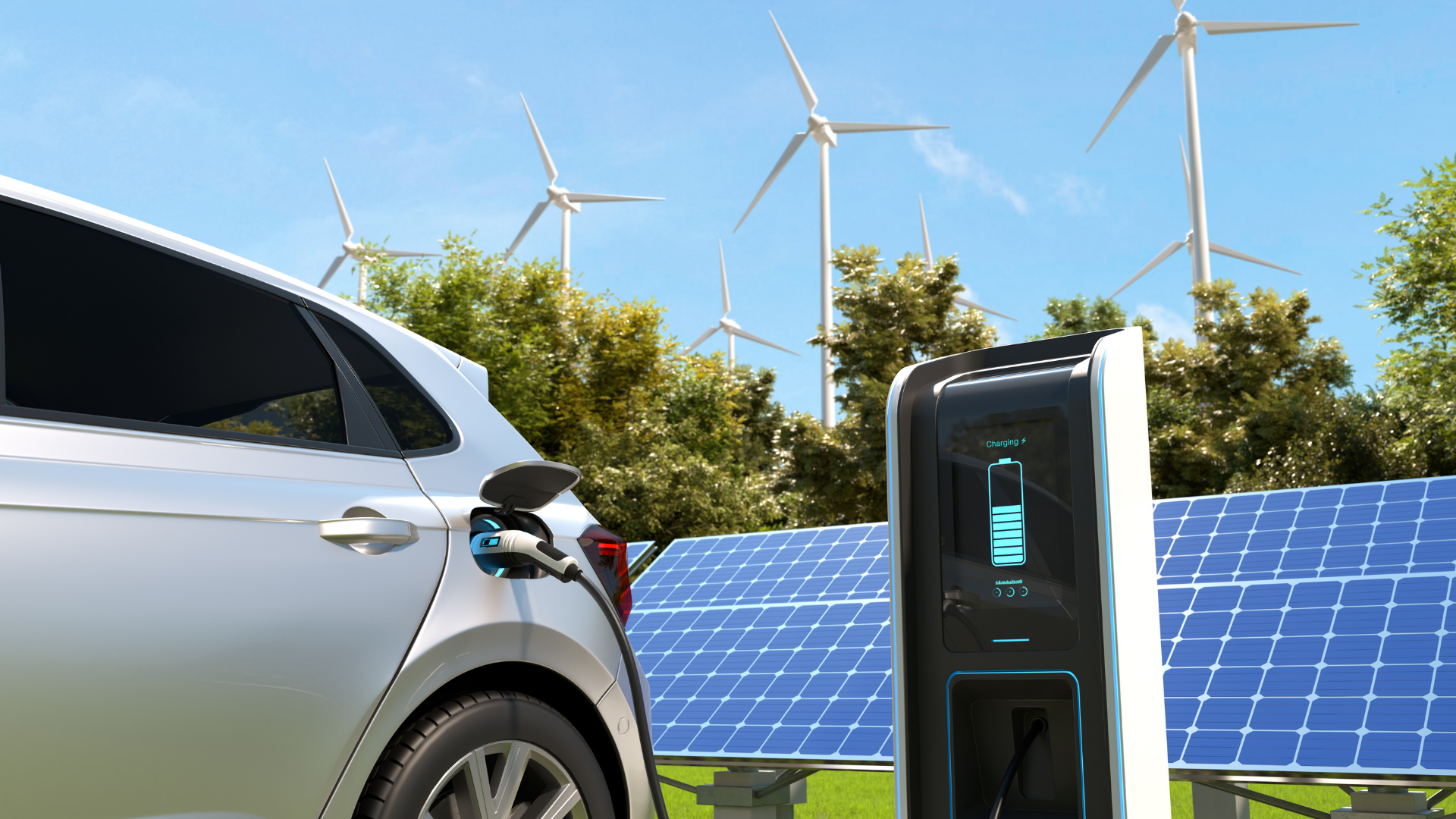
Electricity is produced on-site using solar energy, managed through battery storage, and delivered to charging stations using intelligent energy management systems.
Rather than depending entirely on utility infrastructure, the charging system becomes its own localized energy source.
Solar Energy Production
Solar panels capture sunlight throughout the day and generate electricity for the charging system.
Advanced solar tracking systems continuously adjust panel orientation to maximize energy production.
Battery Storage
Battery systems store excess energy generated during daylight hours.
Stored electricity is then available when vehicles require charging, including during periods of reduced sunlight.
Energy Management
Software continuously monitors:
- Solar production
- Battery capacity
- Charging demand
- Energy availability
This helps balance production and usage throughout the day.
Reliability
Modern off-grid systems are designed for commercial applications where reliability is essential.
Thoughtful planning helps ensure the system is appropriately sized for anticipated charging demand.
Commercial Applications
Off-grid charging may be well suited for:
- Corporate campuses
- Fleet operations
- Municipal facilities
- Hospitality properties
- Educational campuses
- Business parks
- Large parking areas
Each application should be evaluated based on operational requirements and long-term property goals.
Why Clear Blue Commercial Selected Solaflect
At Clear Blue Commercial, we believe commercial EV charging should be evaluated through the same lens as every other capital improvement: Will it improve long-term property performance?
As we evaluated available technologies, we looked beyond the charging equipment itself.
We considered installation requirements, operational efficiency, scalability, energy production, maintenance, and long-term value for commercial property owners.
That evaluation led us to partner with Solaflect.
Why?
Because the technology aligns with the planning philosophy we bring to every commercial property.
Rather than relying solely on conventional approaches, Solaflect’s solar-tracking system is designed to maximize on-site energy production while supporting commercial charging applications with minimal site disruption.
For many commercial properties, this creates opportunities to reduce dependence on utility infrastructure while providing a flexible path toward future expansion.
That does not mean every property should choose an off-grid solution.
It means every property deserves an objective evaluation of all available options before making a long-term investment decision.
Our role is to help owners understand those options and determine which approach best supports their property, operations, and long-term goals.
Commercial EV Charging Is Part of Long-Term Property Planning
Commercial EV charging should not be viewed as an isolated construction project.
Like roofing, HVAC replacement, parking lot reconstruction, or major tenant improvements, it should be incorporated into a property’s long-term capital planning process.
Many owners find opportunities to coordinate charging infrastructure with other planned improvements, including:
- Parking lot renovations
- Electrical system upgrades
- Building modernization projects
- Tenant improvements
- Sustainability initiatives
- Site redevelopment
- Infrastructure expansion
Planning charging infrastructure alongside these projects can often reduce disruption, improve coordination, and create a more efficient use of capital.
Ultimately, commercial EV charging is not simply about installing equipment.
It is about preparing a property to meet future transportation needs while supporting long-term operational performance and asset value.
Questions Every Commercial Property Owner Should Ask
Before investing in commercial EV charging infrastructure, it’s worth stepping back and evaluating the broader picture. The goal isn’t simply to determine whether to install charging stations—it’s to determine how charging fits into your property’s long-term strategy.
The following questions can help guide that planning process.
How will EV charging be used?
Understanding who will use the charging stations is the starting point.
Will they primarily serve:
- Employees?
- Tenants?
- Customers?
- Visitors?
- Fleet vehicles?
- Municipal operations?
The answer influences everything from charger type to parking layout and future expansion.
Will our existing electrical capacity support future growth?
Some commercial properties already have adequate electrical infrastructure.
Others may require:
- Additional utility service
- Transformer upgrades
- Switchgear improvements
- Electrical distribution modifications
Understanding current capacity early helps avoid unexpected costs later.
Should installation occur in phases?
Not every property needs its full charging buildout on day one.
Many owners choose to:
- Install conduit now
- Prepare electrical infrastructure
- Reserve future charging locations
- Expand as demand increases
Phased implementation often provides greater flexibility while reducing future disruption.
Will utility upgrades be required?
Utility improvements can influence:
- Budget
- Construction schedules
- Permitting
- Project timelines
Understanding these requirements early allows owners to make more informed decisions.
Could an off-grid solution reduce construction costs?
For some properties, off-grid charging may reduce the need for major trenching, utility upgrades, or electrical expansion.
Every property is different, making objective evaluation an important part of the planning process.
How will charging affect parking operations?
Charging stations influence:
- Parking layout
- Traffic flow
- Accessibility
- Pedestrian circulation
- Future expansion
Thoughtful planning helps integrate charging naturally into existing parking operations.
How should future expansion be planned?
One of the biggest opportunities is preparing today for tomorrow’s growth.
Even if only a small number of chargers are installed initially, planning infrastructure for future expansion often reduces long-term construction costs.
Common Misconceptions About Commercial EV Charging
As commercial EV adoption continues to grow, several misconceptions continue to influence planning decisions.
Understanding these common assumptions helps owners make more informed choices.
Misconception #1: Equipment selection is the first step.
In reality, successful projects begin with planning.
Property use.
Electrical capacity.
Parking layout.
Future demand.
Long-term goals.
These decisions should come before selecting charging equipment.
Misconception #2: Every property needs DC Fast Charging.
Not necessarily.
Many commercial properties are better served by Level 2 charging, particularly where vehicles remain parked for extended periods.
The appropriate charging speed depends on how the property is used.
Misconception #3: Electrical capacity won’t be an issue.
Electrical infrastructure is often one of the most significant planning considerations.
Evaluating capacity early helps owners understand available options before construction begins.
Misconception #4: Off-grid charging is only for remote locations.
Modern off-grid commercial charging systems can be appropriate in a variety of environments.
For some properties, they offer an alternative when utility upgrades are expensive, time-consuming, or operationally disruptive.
The best solution depends on the property’s specific goals—not its ZIP code.
Is Your Property Ready?
Commercial EV Charging Readiness Checklist
Use this checklist as a starting point for evaluating your property’s readiness.
☐ Employees have requested workplace charging.
☐ Tenants have expressed interest in EV charging.
☐ Customers or visitors may benefit from charging access.
☐ Fleet electrification is part of future planning.
☐ Parking lot improvements are already scheduled.
☐ Electrical capacity has been evaluated.
☐ Capital improvements are planned within the next several years.
☐ Sustainability initiatives are part of the property’s long-term goals.
☐ Future expansion has been considered.
☐ EV charging has been discussed as part of overall asset planning.
The more boxes you can check, the better positioned your property may be to begin evaluating charging infrastructure.
Frequently Asked Questions
What is commercial EV charging infrastructure?
Commercial EV charging infrastructure includes the equipment, electrical systems, parking design, and supporting technology required to provide electric vehicle charging at commercial properties.
How many charging stations do I need?
There is no universal answer.
The appropriate number depends on:
- Property type
- Number of users
- Parking availability
- Expected demand
- Future expansion plans
What is the difference between Level 2 and DC Fast Charging?
Level 2 charging typically supports vehicles parked for longer periods, such as employees or hotel guests.
DC Fast Charging delivers significantly faster charging and is often appropriate where drivers make shorter visits or fleet turnaround times are important.
The right solution depends on how the property will be used.
Can I avoid utility upgrades?
In some situations, yes.
Options such as phased implementation, load management, or certain off-grid solutions may reduce the need for major utility improvements.
An infrastructure assessment helps determine the most practical approach.
How long do commercial charging stations last?
Like most commercial equipment, charging stations require routine maintenance and periodic updates. Life expectancy depends on equipment quality, usage, environmental conditions, and ongoing maintenance.
Does EV charging increase property value?
EV charging should be viewed as one element of a broader property strategy.
While charging may enhance tenant amenities and improve a property’s competitive position, the overall value depends on location, market conditions, user demand, and how well the infrastructure supports long-term property objectives.
Continue Exploring
Commercial Property Management
Continue learning about strategic property operations and long-term asset management.
- Commercial Property Management Master Guide
- Building Operations
- Preventive Maintenance
- Tenant Relations
- Capital Planning
- Sustainability
Commercial EV Charging
Expand your understanding of commercial charging infrastructure.
- Off-Grid Commercial EV Charging
- Grid-Connected Commercial EV Charging
- Commercial EV Charging Planning Guide
- Commercial Fleet Charging
- Solar Tracking Technology
- Battery Storage
- Electrical Capacity Planning
Commercial EV Charging
Expand your understanding of commercial charging infrastructure.
- Off-Grid Commercial EV Charging
- Grid-Connected Commercial EV Charging
- Commercial EV Charging Planning Guide
- Commercial Fleet Charging
- Solar Tracking Technology
- Battery Storage
- Electrical Capacity Planning
Regional Resources
Explore commercial property insights throughout California.
- California
- North Bay
- Sacramento Region
- Sonoma County
- Marin County
- Napa County
- Solano County
Related EV Charging Resources
Commercial EV charging strategies vary by property type. Explore additional Knowledge Center resources tailored to specific commercial environments.
Office Buildings
Planning workplace charging that supports employees, tenants, and future growth.
Industrial Properties
Evaluating charging infrastructure for logistics operations, service vehicles, and fleet electrification.
Retail Centers
Enhancing customer convenience while planning for future transportation trends.
Healthcare Facilities
Supporting patients, visitors, physicians, and staff with thoughtful charging strategies.
Hotels & Hospitality
Integrating charging as a guest amenity while supporting long-term property performance.
Municipal Properties
Planning public infrastructure that aligns with transportation and sustainability goals.
Fleet Charging
Understanding operational considerations for commercial fleet electrification.
Schools & Universities
Planning flexible charging infrastructure for educational campuses.
Mixed-Use Developments
Creating scalable charging strategies for properties that serve multiple user groups.
Planning Today for Tomorrow's Transportation
Commercial EV charging is not simply about adding charging stations to a parking lot.
It is about preparing commercial properties for the way people, businesses, and communities will move in the years ahead.
For some owners, that preparation may involve installing charging infrastructure today.
For others, it may mean evaluating electrical capacity, incorporating future conduit into parking lot improvements, or developing a phased implementation plan that aligns with capital projects.
The important step is not rushing to install equipment.
It is taking the time to understand how transportation trends, tenant expectations, municipalities, sustainability initiatives, and long-term investment goals intersect with the property.
When commercial EV charging is approached as part of a broader commercial property management strategy, it becomes more than an infrastructure project.
It becomes another way to strengthen operational performance, improve long-term flexibility, and protect asset value.
The future of commercial real estate will be shaped by thoughtful planning—not by reacting after change has already arrived.
At Clear Blue Commercial, we believe buildings can do more than generate returns — they can support people, communities, and the planet.
Our complimentary Sustainable Property ROI Audit Kit is a simple, thoughtful way to explore how your properties can operate more efficiently, reduce waste, and create healthier spaces while strengthening long-term performance. In just a few minutes, you’ll receive clear insights and practical next steps designed to help you lead with both purpose and impact.