Sustainable Commercial Property Management in Sacramento
Reduce Operating Costs. Improve Building Performance. Protect Long-Term Property Value.
More Than an Environmental Goal
Sustainability in commercial real estate is often discussed as an environmental objective. For commercial property owners, it can also be a financial strategy.
Energy consumption, water use, HVAC performance, preventative maintenance, waste, irrigation, lighting, building controls, and other operational decisions all affect what it costs to own and operate a commercial property. When resources are being wasted, money is usually being wasted with them.
Clear Blue Commercial brings sustainable commercial property management to Sacramento by integrating sustainability into commercial property management in Sacramento. We help owners operate buildings more efficiently, control recurring expenses, make better capital decisions, and improve long-term asset performance.
Our Philosophy
The objective isn’t sustainability at any cost.
It’s sustainability that makes business sense.
Four Connected Areas
Where Sustainability and Operating Costs Meet
Sustainable commercial property management looks at the relationship between a building’s environmental performance and its financial performance. For Sacramento commercial property owners, that means taking a closer look at four connected areas.
Energy & Controls
- ✓ Energy consumption and efficiency
- ✓ Lighting and building controls
Water & Waste
- ✓ Water use and conservation
- ✓ Irrigation and landscaping
- ✓ Waste reduction
HVAC & Maintenance
- ✓ HVAC performance
- ✓ Preventative maintenance
- ✓ Building-system upgrades
Capital Planning & ROI
- ✓ Capital planning
- ✓ EV charging and transportation infrastructure
- ✓ Available incentives
- ✓ Operating expenses and potential ROI
The goal is to identify improvements that make sense for the property, the owner, and the property’s long-term strategy.
What Is Sustainable Commercial Property Management?
Sustainable commercial property management incorporates environmental and resource-efficiency considerations into the everyday operation and long-term planning of a commercial property.
That doesn’t mean every building needs solar panels, new mechanical systems, or a major sustainability renovation. Often, the first step is much simpler: understand how the building is operating now. Once owners understand where resources are going, they can begin identifying where opportunities may exist.
Start With the Building You Already Have
Sustainability conversations can move quickly toward new equipment and major improvements. But before buying something new, it makes sense to understand what you already own. Existing building systems may perform better through maintenance, scheduling, controls, repairs, or operational changes.
Some improvements require capital. Others involve changing how the building is operated. Both can matter.
Questions Worth Asking First
- ✓ How much energy and water is the building using?
- ✓ Are HVAC systems operating efficiently?
- ✓ Is equipment running when the building doesn’t need it?
- ✓ Are irrigation systems working correctly?
- ✓ Are recurring maintenance problems increasing resource consumption?
- ✓ Could existing equipment run more efficiently with better maintenance or controls?
A commercial property manager can help examine how the property is functioning and flag areas that deserve further investigation, from unusually high utility consumption and after-hours equipment operation to recurring HVAC problems, irrigation issues, outdated lighting, water leaks, or systems that are no longer performing efficiently.
Six Places to Look
Where Can Sacramento Commercial Properties Reduce Operating Costs?
Sustainability becomes meaningful to a property owner when it moves from an idea to measurable building performance. The opportunity is rarely one large project. More often, it is a combination of improvements across everyday building operations, and the first step is identifying where the property may be using more resources, and spending more money, than necessary.
Energy Efficiency
Find the cause before choosing the fix.
Before considering major equipment replacements, look at how existing systems actually operate: HVAC running when the building is largely unoccupied, thermostats or controls that aren’t working properly, or electricity use rising without an obvious explanation.
Sometimes the answer is an operational adjustment, sometimes maintenance, and sometimes an aging system is ready for more efficient replacement. Understand the cause before deciding on the solution.
HVAC Performance
Sacramento summers test every system.
Sacramento’s hot summers put substantial demands on commercial HVAC systems. An inefficient system can affect energy costs, maintenance costs, tenant comfort, repair frequency, equipment life, and capital planning.
A system that receives regular preventative maintenance may operate more effectively than one serviced primarily when something goes wrong.
Water Conservation
Small leaks become recurring costs.
Restrooms, kitchens, landscaping, irrigation, and cooling systems all use water, and small problems like a leaking fixture can become recurring operating expenses. Monitoring use and investigating unusual changes helps catch issues early.
Conservation doesn’t mean reducing services or compromising the property’s appearance. It means using water intentionally and efficiently.
Irrigation
Waste hides where no one is watching.
Irrigation is an easy place for waste to hide because few owners or tenants see it running. A broken sprinkler head, poor positioning, an incorrect schedule, a leak, or an outdated control can keep wasting water, and the first evidence may appear on the water bill.
Regular inspections catch problems earlier, and on properties with significant landscaping, small fixes add up across the site and over multiple years.
Lighting & Controls
The right technology, run intelligently.
Older lighting can consume considerably more energy than newer alternatives, and occupancy sensors, scheduling, and controls create additional opportunities.
But equipment is only part of the equation. Lights in unoccupied areas, poorly scheduled exterior lighting, and building schedules out of step with actual occupancy all matter, so the strongest strategy pairs the right technology with intelligent building operations.
Waste Reduction
Match service levels to actual use.
Start with what is happening now: the services the property pays for, how often containers are serviced, whether service levels match actual usage, and whether recycling or diversion opportunities are being missed.
Tenant understanding of the property’s waste systems matters too. As with energy and water, better information shows whether resources and money are being used effectively.
The Most Expensive Waste May Be the Waste You Don’t See
Some property expenses are obvious. A broken HVAC unit, a roof repair, or a plumbing emergency each produces an invoice. Inefficiency is harder to see.
An HVAC system consuming more energy than necessary doesn’t send the owner a separate bill labeled “inefficiency.” A leaking irrigation system doesn’t identify how much of the water bill was unnecessary, and equipment running longer than needed doesn’t separate wasted electricity from productive electricity. The owner simply receives a larger utility bill.
That is why sustainable commercial property management asks a different question:
Are we spending this money because the property genuinely requires it, or because the building could be operating more efficiently?
Benchmarking: Is Your Property Using More Than It Used To?
You don’t always need sophisticated technology to spot efficiency opportunities. Sometimes the property’s own history tells the story. Compare utility consumption over time and watch for:
- Rising electricity or water use
- Repair expenses trending upward
- Equipment needing more frequent service
- Vendor costs climbing in one category
Those changes may have legitimate explanations. Occupancy may have increased, utility rates may have changed, or weather may have affected energy consumption. But changes can also reveal operational issues, so the important step is asking why.
Commercial property management becomes more strategic when financial information and building information are evaluated together.
Small Savings Become Large Savings Over Time
Don’t look only for the dramatic savings. Look for recurring waste.
Owners sometimes dismiss an efficiency improvement because the monthly savings look small. But a reduction that continues every month can produce savings for years. Multiply that across energy, water, maintenance, irrigation, waste, and other operating categories, and the cumulative effect becomes meaningful. Stopping unnecessary expenses can matter as much as finding one major improvement.
Preventative Maintenance Is a Sustainability Strategy
Preventative maintenance and sustainability are closely connected. Equipment that isn’t properly maintained may consume more energy. A water leak wastes water. An irrigation problem can increase both water consumption and landscaping expenses, and an HVAC system struggling with maintenance issues may use more electricity while delivering poorer performance.
Sustainability is sometimes associated with replacing older equipment, but replacement isn’t always the first answer. Existing equipment may be underperforming because it needs maintenance, repair, adjustment, or better controls.
Preventative maintenance helps building systems operate closer to their intended efficiency and gives owners better information about equipment condition.
When Maintenance Signals a Bigger Decision
Maintenance also shows owners when continued repair is becoming less economical than replacement. Signals worth watching:
- 1Equipment requiring more frequent repairs
- 2Declining performance
- 3Rising energy use
- 4Tenants reporting inconsistent temperatures
- 5Repair and operating costs that keep climbing
A commercial property manager can help owners recognize when that conversation needs to happen. That is where maintenance, sustainability, and capital planning begin to overlap.

Sustainability and Commercial Property ROI
Every commercial property has two fundamental financial sides: money coming in and money going out. Owners naturally pay attention to revenue, occupancy, rents, and tenant retention. Operating expenses deserve the same attention, because energy, water, maintenance, repairs, waste services, landscaping, and other recurring costs significantly affect a property’s financial performance.
One of the biggest misconceptions about sustainable commercial real estate is that sustainability automatically means additional expense. Sometimes an improvement requires significant investment. Sometimes it doesn’t. And an improvement that reduces a recurring expense isn’t worth just one month of savings: if it keeps performing as expected, those savings can continue year after year.
The more useful question is:
What does the improvement cost compared with what it can potentially save or accomplish?
Priorities
Sustainability Investments Compete for Capital
Owners have competing priorities. A roof may need attention, HVAC equipment may be aging, a tenant improvement may be approaching, parking areas may require work, or electrical infrastructure may need upgrades. Sustainability investments need to be evaluated alongside those priorities. The goal isn’t to pursue every possible improvement. It’s to identify the ones that produce meaningful environmental, operational, and financial benefits.
Example
Compare Realistic Options
Imagine an aging HVAC system that already needs replacement. The analysis isn’t necessarily the full price of a new high-efficiency system compared with doing nothing, because doing nothing may no longer be a realistic option. Comparing the cost and long-term operating performance of one replacement option against another can produce a very different ROI calculation.
How to Evaluate a Sustainability Improvement
- ✓ Initial project cost
- ✓ Expected energy and water savings
- ✓ Maintenance savings and reduced repair expenses
- ✓ Available rebates or incentives
- ✓ Useful life of the improvement
- ✓ Replacement timing, including costs that would have occurred anyway
- ✓ Potential tenant benefits
- ✓ Operational improvements
- ✓ Estimated payback period
- ✓ Long-term ownership plans and strategy
An expensive improvement with little measurable benefit may not be the right decision. A modest improvement that reduces a recurring expense for years could be far more valuable. The goal isn’t to do everything.
The goal is to do what makes sense.
Doing the Math
Payback Period: How Long Until an Improvement Pays for Itself?
The payback period estimates how long it may take for the financial benefits of an improvement to recover the initial investment.
Example
$20,000
Efficiency project cost
~$5,000
Expected annual reduction in operating expenses
~4 years
Simple payback period
Real-world calculations can be more complex. Maintenance expenses, utility-rate changes, incentives, financing costs, equipment life, tax considerations, and other variables may affect the actual return. But payback gives owners a useful starting point for comparing opportunities.
Look Beyond the Simple Payback
The shortest payback period isn’t automatically the best investment, because some benefits aren’t fully reflected in utility savings. A new HVAC system may reduce energy consumption, and it may also reduce repair expenses, improve reliability, deliver more consistent temperatures, reduce emergency service calls, and improve tenant comfort. Similarly, an irrigation improvement may lower water expenses while improving landscaping performance and reducing maintenance problems.
Commercial property decisions are rarely one-dimensional. The strongest analysis considers how an improvement affects the whole property.
Incentives Can Change the Financial Equation
Rebates, tax incentives, utility programs, financing options, and other programs may be available for certain commercial property improvements. When they apply, they can reduce the owner’s net investment, shorten the payback period, and make an improvement that first appeared marginal considerably more attractive.
Programs change over time, and eligibility depends on the project, property, technology, utility provider, and current requirements. Incentives should be investigated as part of the decision, not assumed, especially before finalizing energy efficiency, electrification, EV charging, water conservation, or renewable energy projects.
A Common Capital Question
Repair or Replace? Sustainability Can Help Inform the Decision
One of the most common capital questions commercial property owners face is whether to keep repairing an existing building system or replace it. There is rarely one universal answer. The decision may depend on:
The equipment
- ✓ How old the equipment is
- ✓ How frequently it is failing
- ✓ How much repairs are costing
- ✓ Whether parts are becoming difficult to find
- ✓ How efficiently it is operating
The investment
- ✓ How critical the system is to tenants
- ✓ What replacement would cost
- ✓ Whether new equipment could reduce ongoing operating expenses
- ✓ Whether incentives are available
- ✓ How long the owner expects to hold the property
A commercial property manager who understands the building’s maintenance history can help owners assemble the information needed to answer those questions.
That is another reason preventative maintenance records are valuable: they turn a capital decision into an informed decision.
And when replacement does make sense, owners can compare equipment not only on purchase price but also on efficiency, expected operating costs, maintenance needs, available incentives, and useful life.
Plan Once, Benefit Twice
Sustainability and Capital Planning Belong Together
Capital planning creates an opportunity to incorporate sustainability at the point where investment is already required. Planning sustainability alongside necessary capital improvements can be more economical than treating it as a separate project later.

Future-Ready
Plan for Tomorrow’s Infrastructure While Working on Today’s Property
Long-term capital planning makes it possible to coordinate projects. If a property may need electrical upgrades in the next several years and the owner is also considering EV charging, electrification, or renewable energy, understanding those plans early can shape today’s infrastructure decisions and reduce the need to redo work later.
This is what future-ready commercial property management looks like. It doesn’t require predicting exactly what a property will need ten years from now. It means asking whether today’s investment could affect tomorrow’s options.
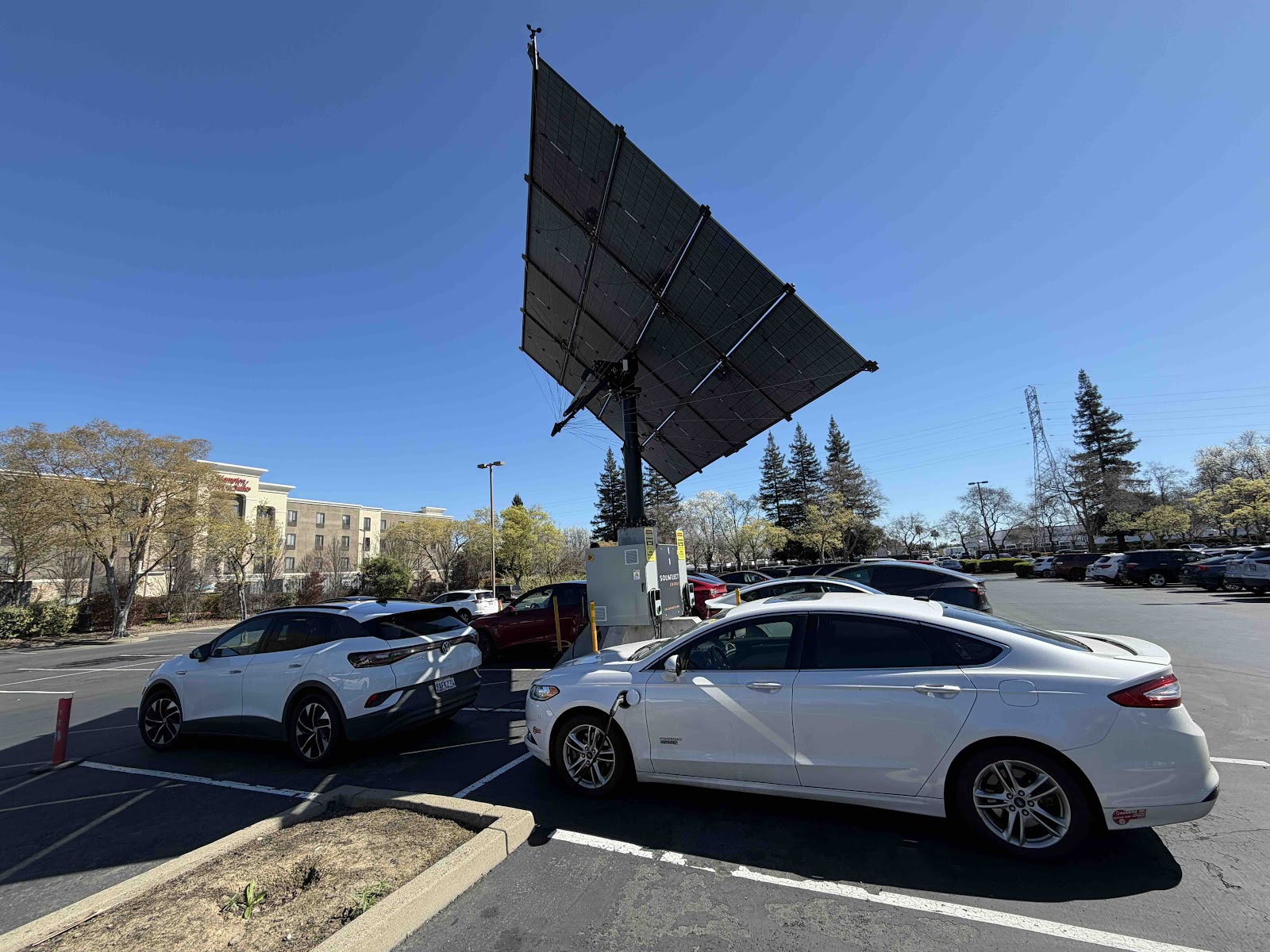
EV Charging Is a Property Strategy
Electric vehicle charging is a good example of why sustainability needs to be integrated into commercial property planning. Installing EV chargers can involve far more than purchasing equipment. Owners may need to consider:
- Who will use the chargers
- Expected charging demand
- Electrical capacity
- Parking configuration
- Utility requirements
- Permitting
- Trenching and site work
- Equipment costs
- Installation costs
- Ongoing maintenance
- Billing or access systems
- Future expansion
- Available incentives
Some Sacramento-area commercial properties may also have alternatives to conventional grid-connected charging infrastructure that can reduce the trenching, electrical work, or site disruption required.
The appropriate solution depends on the property.
Not the first question
“Which EV charger should we install?”
The right first question
“What problem are we trying to solve?”
People and Performance
Sustainability Supports Tenant Retention and Long-Term Competitiveness
Tenants Experience the Building Itself
Commercial property sustainability isn’t experienced only through utility bills. Comfortable temperatures, reliable systems, well-maintained common areas, functional lighting, appropriate landscaping, transportation options, and responsive property management all shape how tenants feel about a property. For some organizations, sustainability also aligns with their own environmental or corporate objectives.
Not every tenant will value every sustainability feature equally, which is why tenant communication matters. Property managers who know their tenants can better understand which improvements provide meaningful value to the people using the property.
Staying Competitive as Expectations Evolve
Commercial buildings compete for tenants, businesses, employees, investors, and future buyers. As building technology, transportation, energy systems, and tenant expectations evolve, properties may need to evolve with them.
That doesn’t mean chasing every trend. It means understanding which changes may affect long-term competitiveness and thinking ahead about building efficiency, operating costs, electrical capacity, EV charging, resource use, and future capital needs. The objective is to make thoughtful investments before changing conditions force rushed decisions.
Local Context
Sacramento Commercial Properties Have Their Own Sustainability Considerations
Commercial properties in the Sacramento region operate within Northern California’s climate, regulatory environment, utility landscape, water considerations, transportation changes, and evolving tenant expectations.
There is no single sustainability plan that works for every Sacramento commercial property.
Has different usage patterns from an industrial facility or retail center.
May have operating requirements that differ significantly from retail.
May have different sustainability objectives, procurement, reporting, and budget considerations than privately owned real estate.
Each brings its own usage patterns and operating needs.
Effective sustainable commercial property management begins with understanding the individual property, not the solution.
Statewide Goals Become Individual Property Decisions
California has long been a leader in energy efficiency, water conservation, transportation electrification, renewable energy, and other sustainability initiatives. But statewide goals ultimately become decisions owners actually face:
- → Whether an HVAC system needs replacement
- → Whether a building can reduce energy use
- → Whether irrigation is wasting water
- → Whether EV charging makes sense
- → What infrastructure the property will need
- → Whether an incentive is available for a planned improvement
A commercial property manager can help connect broader sustainability objectives with the practical realities of operating an individual building.
Clear Blue Commercial’s Approach to Sustainable Commercial Property Management
Sustainability is less effective when it exists as a separate checklist. Energy decisions affect maintenance, maintenance affects equipment life, equipment life affects capital planning, and capital planning affects financial performance. Building performance shapes tenant experience and retention, and transportation changes reach parking and electrical infrastructure. Everything is connected, so we take a whole-property approach and evaluate opportunities based on the actual property rather than a generic checklist.
01
Know the Building
Data matters, and so does being on site. A utility bill can show that water use increased; walking the property may reveal why. Financial reports, tenant conversations, maintenance history, and inspections together show how the building, and the work done on it, is really performing. That is why we emphasize hands-on, face-to-face commercial property and facilities management.
02
Measure and Set a Baseline
Useful measurement can start with information you already have: utility bills, water consumption, maintenance history, vendor expenses, repair frequency, equipment age, operating budgets, tenant feedback, and capital plans. Together they reveal patterns, and a baseline of energy, water, maintenance, and operating costs makes it possible to tell whether an improvement worked.
03
Prioritize
Owners rarely have unlimited capital, and even good improvements may not all make sense at once. An aging roof may come before lighting. A failing HVAC system may move up because replacement is already approaching. A water issue producing immediate waste may come before a longer-term energy project, and an upcoming parking-lot project may be the moment to evaluate EV infrastructure.
04
Improve and Verify
Many improvements happen through vendors: HVAC contractors, electricians, plumbers, landscaping and irrigation specialists, roofers, lighting professionals, waste providers, and EV charging companies. We coordinate them around the property’s larger objectives, then compare results against the baseline while accounting for weather, occupancy, utility rates, and tenant usage. The question becomes not only “Was the work completed?” but “Did the work improve the property?”
Progress, Not One Massive Project
One reason owners hesitate to explore sustainability is the assumption that they will immediately face a long list of expensive projects. That is not how an effective strategy needs to work. Start with information, understand how the property operates, identify obvious waste, look at upcoming maintenance and capital needs, decide which improvements deserve further analysis, and then prioritize.
Some changes will be operational. Some will involve preventative maintenance. Some can be folded into projects the owner already needs to complete, and others will become longer-term capital investments. Sustainability can be a progression rather than a single major initiative.
Ask Where the Property Is Losing Money
One of the most useful sustainability questions is also one of the simplest: where might this property be spending money unnecessarily? Not every investigation will uncover major savings, but owners can’t address inefficiency they have never identified. The same thinking applies to vendors. Instead of asking each one only to complete a task, we also ask whether there is a better way to operate that part of the property.
The question isn’t simply “How can we make this property greener?” It’s “How can we operate and invest in this property more intelligently?”
When owners have better information, they make better decisions, and better decisions can lead to lower operating costs, stronger building performance, and greater long-term asset value.
Sustainable Commercial Property Management for Public-Sector Properties
Sacramento is home to the California state government and numerous public agencies and organizations. Public-sector property and facility management can involve additional considerations around sustainability, accountability, procurement, reporting, accessibility, budgeting, and long-term stewardship.
Public entities are managing more than buildings. They are managing public resources, which makes operational efficiency particularly important: energy and water waste don’t only affect environmental performance, they can represent unnecessary ongoing expenditures.
Approved State of California Vendor
Clear Blue Commercial is an approved vendor for the State of California and understands the importance of combining responsible commercial property management with transparency, sustainability, and financial stewardship. Exact requirements vary by agency and property, but the underlying principle remains the same.
Our Guiding Principle
Use resources responsibly while maintaining safe, functional, high-performing facilities.
Sustainable Commercial Property Management in the Sacramento Region
Clear Blue Commercial provides sustainable commercial property management and related commercial real estate services throughout the greater Sacramento region, including:
SacramentoWest SacramentoRancho CordovaElk GroveFolsomRosevilleRocklinCitrus Heights
and surrounding Sacramento-area communities
Our approach combines commercial property management, facility management, sustainability consulting and project management, commercial brokerage, and long-term asset planning. The objective isn’t simply to make commercial properties more sustainable. It is to help owners operate them more intelligently.
Why Clear Blue Commercial?
Sustainability has been part of Clear Blue Commercial’s approach to commercial real estate from the beginning. We believe commercial properties can be managed in ways that support financial performance while reducing unnecessary environmental impact.
Certified B Corporation
California Green Business
Woman-Owned Business
Member of 1% for the Planet
Approved State of California Vendor
Those credentials reflect a larger philosophy: sustainability, financial responsibility, transparency, and good commercial property management belong together.
We look at the building.We look at the numbers.We talk with the tenants.We work with the vendors.We examine upcoming capital needs.
And we look for opportunities where better building performance can also create better financial performance.
Start With Your Property’s Current Performance
You don’t need to commit to a major sustainability project to begin improving your commercial property. Start by understanding how it performs today: where energy and water are going, which systems require repeated repairs, what your largest operating expenses are, which major components are approaching replacement, and where recurring costs could come down.
Clear Blue Commercial’s complimentary Sustainable Property ROI Audit Kit is designed to help commercial property owners examine these questions and identify opportunities involving operations, maintenance, sustainability, tenant experience, and long-term asset performance.
Continue Exploring
Learn more about how Clear Blue Commercial helps Sacramento-area owners manage, improve, and future-proof their properties.
Sacramento Commercial Property Management
Commercial property management for owners throughout the Sacramento region.
Next Level Property & Facilities Management
Hands-on, face-to-face property and facilities management.
Sustainability Consulting & Project Management
Planning and project support for sustainability improvements that make business sense.
Commercial EV Charging Infrastructure
Plan EV charging around your property’s users, capacity, and long-term strategy.
Energy and Water Efficiency: The Hidden ROI
From the blog: how efficiency connects to returns in Sacramento commercial properties.
Sacramento Sustainable Commercial Property Management FAQs
What is sustainable commercial property management?
Sustainable commercial property management integrates resource efficiency, environmental responsibility, and long-term building performance into the everyday management of commercial real estate. It can include energy efficiency, water conservation, preventative maintenance, HVAC optimization, lighting and building controls, waste management, irrigation, capital planning, EV charging, and other building improvements.
The objective is to identify opportunities that make sense environmentally, operationally, and financially.
Can sustainable commercial property management save owners money?
Yes. Sustainable commercial property management can identify opportunities to reduce unnecessary operating expenses. Potential savings may come from lower energy or water consumption, improved equipment efficiency, preventative maintenance, reduced waste, better irrigation management, optimized building controls, and more strategic capital investments.
Actual savings depend on the individual property and the improvements implemented. The important point is that resource waste frequently represents financial waste. Reducing one can help reduce the other.
How does sustainability improve commercial property ROI?
Sustainability can potentially improve commercial property ROI by reducing recurring operating expenses and improving the performance of building systems. For example, an efficiency improvement that reduces energy or water costs can produce savings over multiple years. Preventative maintenance may help equipment operate more efficiently and potentially extend its useful life, and strategic capital improvements may reduce future repair and operating expenses.
The financial impact needs to be evaluated based on project cost, expected savings, incentives, maintenance requirements, useful life, and ownership objectives.
What are the best sustainability improvements for a Sacramento commercial property?
There is no single best improvement for every property. The right opportunities depend on the building’s age, condition, equipment, utility consumption, tenants, operating schedule, landscaping, maintenance history, and future capital needs.
Potential improvements may include HVAC optimization, energy-efficient lighting and controls, water conservation, irrigation improvements, preventative maintenance, equipment upgrades, waste reduction, EV charging, or renewable-energy solutions. The best starting point is understanding how the property currently performs.
How can a commercial property reduce energy costs?
Commercial properties can begin by examining when and how energy is being used. Opportunities may include HVAC maintenance and optimization, lighting improvements, building controls, operating schedules, equipment upgrades, and identifying systems that are running unnecessarily. Owners can also compare energy consumption over time to identify unexplained increases.
Depending on what is causing the inefficiency, the solution may be an operational change, maintenance, new controls, or equipment replacement.
How can a Sacramento commercial property reduce water costs?
Water conservation can begin with monitoring usage and investigating unusual changes. Potential opportunities include repairing leaks, improving irrigation systems and schedules, installing more efficient fixtures or equipment, evaluating landscaping practices, and correcting operational problems that create unnecessary consumption.
Because irrigation systems frequently operate outside business hours, water waste can continue unnoticed. Regular property inspections and consumption monitoring can help identify those issues.
How are preventative maintenance and sustainability connected?
Preventative maintenance can help building systems operate closer to their intended efficiency. Poorly maintained HVAC equipment may use additional energy, leaks waste water, and irrigation problems increase consumption. Equipment problems can also result in unnecessary repairs and premature replacement.
Preventative maintenance helps owners identify those issues earlier while creating better information for future capital decisions. In that sense, it can be both a financial and sustainability strategy.
Does sustainable commercial property management require expensive upgrades?
No. Some sustainability projects require substantial capital investment, but many opportunities begin with operational changes, maintenance, scheduling, controls, leak correction, or other relatively modest improvements.
The appropriate approach is to identify potential opportunities first and then evaluate each one based on cost, expected savings, payback period, useful life, and long-term property objectives. Sustainability does not require doing everything. It requires determining what makes sense for the property.
How do you calculate the payback period for a sustainability project?
A simple payback calculation compares the initial cost of an improvement with the estimated annual financial savings. For example, if an improvement costs $20,000 and is expected to reduce operating expenses by approximately $5,000 per year, the simple payback period would be approximately four years.
A fuller financial analysis can include additional factors such as incentives, maintenance savings, financing costs, utility-rate changes, equipment life, tax considerations, and other benefits. Payback is useful, but it is one part of the investment decision.
Are incentives available for commercial property sustainability improvements in Sacramento?
Depending on the project, commercial property owners may have access to utility programs, rebates, tax incentives, financing programs, or other incentives related to energy efficiency, water conservation, EV charging, electrification, renewable energy, or building improvements.
Programs, funding, and eligibility requirements change over time. Owners need to verify current requirements before making an investment decision rather than assuming a particular incentive will be available.
When does it make more sense to replace equipment rather than repair it?
The decision depends on factors including equipment age, repair frequency, repair costs, efficiency, reliability, parts availability, tenant impact, replacement cost, available incentives, and the owner’s long-term plans.
An older system requiring frequent repairs and consuming increasing amounts of energy may warrant a replacement analysis. Maintenance history can help owners understand whether continued repair remains financially sensible.
Can sustainability help improve tenant retention?
Sustainability can contribute to tenant experience when it improves the building itself. Reliable HVAC systems, comfortable temperatures, efficient lighting, well-maintained landscaping, functional building systems, transportation amenities, and responsive commercial property management can all affect how tenants experience a property.
Some tenants may also value sustainability features because they align with their own organizational goals. Tenant priorities vary, so direct communication remains important.
Is EV charging a good investment for a Sacramento commercial property?
It depends on the property. Owners need to consider tenant and employee demand, electrical capacity, parking configuration, installation requirements, utility coordination, permitting, equipment costs, maintenance, incentives, and expected future use.
EV charging can support a property’s sustainability and transportation strategy, but the appropriate solution needs to be evaluated in the context of the building and its users. The decision begins with understanding the need, not selecting a charger.
Can EV charging be installed without major trenching or electrical infrastructure?
Some commercial properties may have alternative EV charging options that reduce or avoid conventional trenching and electrical infrastructure. Feasibility depends on the site, parking configuration, charging needs, equipment selected, and applicable permitting or installation requirements.
Owners can compare conventional and alternative approaches based on installation cost, site disruption, expected usage, scalability, and long-term operating needs.
How does sustainability fit into commercial property capital planning?
Capital planning creates opportunities to incorporate sustainability when major investments are already required. If HVAC equipment needs replacement, owners can compare higher-efficiency alternatives. If a parking lot is being renovated, future EV infrastructure may be considered. If landscaping is being redesigned, water-efficient options can be evaluated.
Coordinating sustainability with planned capital projects may reduce the need to redo work later and can help owners direct investment toward improvements with multiple benefits.
How can commercial property owners measure whether sustainability improvements are working?
Begin by establishing a baseline before making the improvement. Depending on the project, that might include energy consumption, water use, maintenance expenses, repair frequency, utility costs, or other performance indicators.
After implementation, compare results with the baseline while considering variables such as weather, occupancy, utility rates, and tenant usage. Measurement helps owners determine whether an improvement is producing the expected results.
What is a commercial property sustainability audit?
A commercial property sustainability audit or performance assessment examines how a property is operating and identifies potential opportunities to improve efficiency, reduce waste, control operating costs, and improve building performance. It may examine energy and water consumption, building systems, preventative maintenance, lighting, irrigation, waste, vendor practices, capital needs, tenant experience, and other operational factors.
The purpose is not to create a list of projects the owner must complete. It is to provide better information for deciding where improvements may make financial and operational sense.
How do I know if my commercial property is wasting energy or water?
Start by looking for changes and patterns: energy consumption rising without a matching increase in occupancy, shifts in water usage, utility expenses climbing faster than expected, equipment running outside occupied hours, HVAC systems needing more frequent repairs, or irrigation systems not operating correctly. Utility bills, maintenance records, property inspections, building schedules, and tenant feedback can all provide useful clues.
The first sign of waste is often not a broken system. It is a number that changed without a clear explanation.
Does Clear Blue Commercial provide sustainable commercial property management for public-sector properties?
Clear Blue Commercial works with private and public-sector commercial real estate needs and is an approved vendor for the State of California. Public-sector properties may have additional considerations involving sustainability objectives, procurement, documentation, reporting, accessibility, budgeting, vendor management, and stewardship of public resources.
Clear Blue Commercial integrates sustainability with commercial property and facility management to help organizations evaluate both environmental and financial performance.
What Sacramento-area communities does Clear Blue Commercial serve?
Clear Blue Commercial provides sustainable commercial property management and related commercial real estate services throughout the greater Sacramento region, including Sacramento, West Sacramento, Rancho Cordova, Elk Grove, Folsom, Roseville, Rocklin, Citrus Heights, and surrounding communities.
Specific services depend on the property’s location, type, operating requirements, and owner’s objectives.
Sustainability That Makes Business Sense
A sustainable commercial property doesn’t have to be the property with the most technology or the largest sustainability budget. It can be a property where resources are understood, waste is identified, building systems are maintained, investments are evaluated carefully, and owners make decisions with both today’s operating costs and tomorrow’s asset value in mind.
Sustainability goals have value, and property performance makes them tangible: lower energy consumption, reduced water use, fewer unnecessary service calls, more efficient equipment, better preventative maintenance, and more informed capital investments. That is what sustainable commercial property management in Sacramento means at Clear Blue Commercial: helping owners make better decisions about the buildings they already own.
Use resources intelligently. Reduce unnecessary expenses. Improve building performance. Protect long-term value.