
For many owners asking whether their Sacramento commercial property is ready for EV charging, the conversation begins with a piece of equipment: Which charger should we install? That may be the wrong first question.
Before selecting an EV charger, commercial property owners need to understand the property itself. That means knowing who will use the chargers, how many vehicles need to charge, what electrical capacity is available, and where the chargers will go. It also means understanding what installation will involve, whether trenching will be required, how charging will be managed, and whether demand could increase in the future. Perhaps most importantly, it means deciding what the owner is trying to accomplish.
EV charging can be part of a commercial property’s sustainability strategy, tenant experience, employee amenities, transportation planning, and long-term competitiveness. But the right solution begins with the property, not the charger.
Adding EV charging can involve far more than purchasing equipment. Owners may need to evaluate demand, parking, electrical capacity, utility coordination, site work, permitting, installation, maintenance, incentives, billing, future expansion, and alternative charging solutions. Looking at these factors through a commercial property management lens can help owners make a more informed investment and avoid solving today’s need in a way that creates tomorrow’s problem.
Start With Who Will Use the Chargers
Before discussing technology, determine the need. Will the chargers serve employees, tenants, customers, visitors, fleet vehicles, or government vehicles? The answer affects almost every decision that follows.
A commercial office building where employees park for eight hours may have different charging requirements from a retail property where customers stay for an hour, and a fleet operation may have entirely different needs. Understanding how vehicles use the property helps determine which charging strategy makes sense.
How Much Charging Demand Exists Today?
EV charging infrastructure is easier to plan when owners distinguish current demand from anticipated future demand. It helps to know how many tenants or employees currently drive electric vehicles, whether tenants are requesting chargers, and whether charging could influence leasing or retention. Owners should also consider whether the property serves organizations with fleet-electrification plans and how quickly demand might grow.
Installing far more capacity than a property currently needs may not make financial sense, but installing a system with no ability to expand may create another problem later. The objective is to find an appropriate balance between today’s demand and tomorrow’s flexibility.
Electrical Capacity Can Change the Entire Project
One of the most important questions is whether the property has sufficient electrical capacity to support the proposed charging system. The answer can affect project scope, cost, installation time, utility involvement, and future expansion.
One property may have adequate existing capacity, while another may require electrical upgrades. Depending on the site and charging strategy, owners may also be able to evaluate alternatives that reduce dependence on conventional electrical infrastructure. This is why equipment selection needs to follow property analysis: a charger that looks ideal on paper may not be the best solution for the actual site.
Installation Cost Is More Than the Cost of the Charger
Commercial property owners can easily focus on the price of the charging equipment itself, but installation may include additional expenses such as:
- Electrical work
- Trenching
- Concrete or asphalt work
- Conduit
- Utility coordination
- Engineering
- Permitting
- Signage
- Striping
- Protective equipment
- Accessibility requirements
- Networking or software
- Site restoration
The charger may be only one component of the total investment, so owners need to evaluate the complete installed cost when comparing alternatives.
Trenching and Site Work Can Be Significant
The distance between electrical infrastructure and the proposed charging location can affect project complexity. If conduit needs to cross parking areas or other hard surfaces, trenching and restoration can become part of the project, which may increase cost and disrupt normal property operations during installation.
This is another reason EV charging belongs in long-term commercial property planning. If a parking lot is already scheduled for major work, that may be an opportunity to coordinate future EV infrastructure. Planning projects together can help owners avoid disturbing completed work later.
Alternatives to Conventional Grid-Connected Charging
Not every commercial property needs to approach EV charging in exactly the same way. Depending on the location, parking configuration, charging demand, and project objectives, alternative charging technologies may deserve consideration.
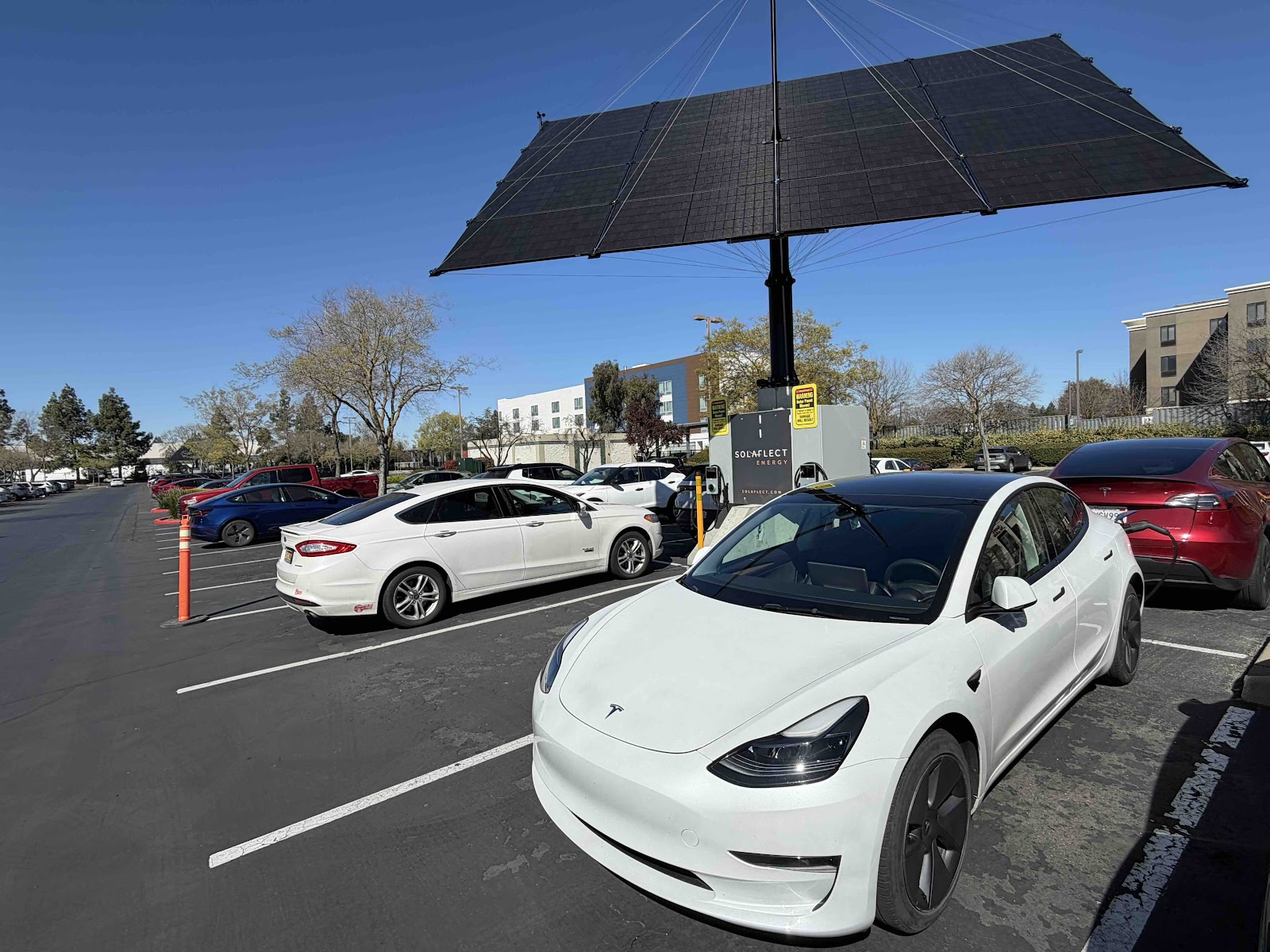
For example, off-grid solar EV charging can offer an alternative for certain commercial properties. Depending on the equipment and site, these systems can potentially reduce the need for conventional electrical connections and extensive trenching. Clear Blue Commercial has experience with off-grid solar EV charging installations in West Sacramento, providing firsthand insight into how alternative charging approaches can fit into a commercial property’s larger sustainability strategy.
The important point is not that one solution is right for every property. It is that owners benefit from knowing they may have more than one option.
Think About Installation Disruption
Commercial properties need to keep functioning while improvements are being made, which makes installation logistics important. Owners should understand how long the work will take, whether parking spaces or other areas will be unavailable, and whether trenching will affect traffic patterns. Utility work may create interruptions, and contractors will need access to the site.
Two projects that look similar financially may have very different operational consequences depending on how they are installed. Commercial property management can help coordinate the project around tenants and normal property operations.
Who Pays for the Electricity?
EV charging creates an ongoing operating question: Who pays for the energy? The answer may depend on the property and the purpose of the chargers. Charging might be provided as a tenant or employee amenity, users may pay directly, costs may be allocated another way, or a fleet may have its own charging arrangement.
Owners also need to consider whether software, networking, payment processing, or management systems create additional recurring expenses. The financial analysis needs to include ongoing operations, not only installation.
What Will Maintenance Look Like?
EV chargers become another piece of property infrastructure, so owners need to plan for maintenance, monitoring, repairs, software, warranties, and vendor support. Useful questions include:
- Who responds if a charger stops working, and how quickly can service be provided?
- Does the equipment require a network subscription?
- How long is the expected equipment life?
- Who monitors usage?
- What happens if the technology becomes outdated?
The answers help owners understand the total cost of ownership.
Incentives Can Affect Project Economics
EV charging projects may qualify for utility programs, rebates, tax incentives, grants, or other forms of assistance depending on the property, equipment, location, program requirements, and timing. Programs can change, funding can run out, and eligibility requirements may be specific.
Owners considering an EV charging project can investigate applicable incentives early in the planning process. An available incentive may change the project’s economics, but the investment still needs to make sense for the property.
EV Charging Can Affect Tenant Experience
For some commercial properties, EV charging may provide value beyond direct financial return. It may serve as a tenant amenity, support employee needs, or help a company or public agency meet sustainability objectives. It may also make a property more convenient for customers and visitors or support a tenant’s fleet transition.
The value will vary significantly by property, which is why commercial property managers benefit from talking with tenants before deciding what to install. Tenant demand is useful information.
Plan for Expansion Before You Need It
A commercial property may need only a small number of charging spaces today, and that does not mean the owner needs to build a large charging system immediately. But it may make sense to consider what expansion would involve: whether the selected equipment can scale, whether there is sufficient electrical capacity, and whether future chargers would require additional trenching. Conduit or other infrastructure might be incorporated into work happening now, or a different initial design might make future expansion easier.
Future-ready planning is not about overbuilding. It is about avoiding unnecessary limitations.
EV Charging and Capital Planning Belong Together
EV charging is most effective when it is considered as part of the property’s larger capital strategy. Parking improvements, electrical upgrades, roof work, solar, building electrification, and tenant improvements may all be on the horizon.
A commercial property owner who understands future capital needs can look for opportunities to coordinate infrastructure. This is another example of how sustainability becomes more valuable when it is integrated into commercial property management.
Don’t Start With the Charger
Commercial property owners do not need to become EV charging experts before exploring their options, but they do need to ask the right questions. Who needs charging, and how much demand exists? What infrastructure does the property already have, and what will installation require and cost? What incentives may be available, how will the system be maintained, and how could demand change? What alternatives exist, and how does the investment fit into the owner’s larger strategy for the property?
Once those questions are answered, selecting equipment becomes much easier. The first decision isn’t which charger to buy. It is what EV charging strategy makes sense for this property.
Sacramento Commercial Property EV Charging FAQs
How do I know if my commercial property is ready for EV charging?
Begin by evaluating charging demand, parking configuration, electrical capacity, proposed charger locations, utility requirements, installation needs, ongoing operating costs, and potential future expansion. A site-specific assessment can help determine what approach is practical.
Does every commercial EV charging installation require trenching?
No. Installation requirements depend on the property, charger location, existing electrical infrastructure, and equipment selected. Some projects may require substantial trenching, while alternative technologies such as certain off-grid charging solutions may reduce or avoid conventional electrical connections and trenching.
Can solar-powered EV charging work for a commercial property?
Off-grid solar EV charging may be an option for certain properties depending on parking configuration, charging demand, available space, equipment, and site conditions. Owners can compare solar/off-grid solutions with conventional grid-connected charging based on cost, installation requirements, capacity, maintenance, and long-term needs.
How much does commercial EV charging cost?
Costs vary significantly depending on charging equipment, number of chargers, electrical capacity, utility work, trenching, engineering, permitting, site work, software, networking, accessibility requirements, and other installation factors. Owners need to compare total installed and ongoing operating costs rather than equipment price alone.
Are incentives available for commercial EV charging in Sacramento?
Utility, government, tax, grant, or other incentive programs may be available depending on the project and current eligibility requirements. Because programs change, owners need to verify available incentives when planning the project.
Can EV charging help attract or retain commercial tenants?
For some properties and tenants, EV charging can be a valuable amenity. Its importance depends on tenant demographics, employee needs, customer use, organizational sustainability goals, and transportation patterns. Talking with tenants can help owners determine whether sufficient demand exists.
How can Clear Blue Commercial help with EV charging?
Clear Blue Commercial approaches EV charging as part of commercial property management, sustainability, and long-term capital planning. This includes helping owners consider site conditions, tenant needs, installation implications, vendor coordination, operating requirements, sustainability objectives, and how charging infrastructure fits into the property’s larger strategy.
Related Resource: Sacramento Sustainable Commercial Property Management
Next Step: Before selecting EV charging equipment, evaluate the property itself. Clear Blue Commercial’s Sustainable Property ROI Audit Kit can help identify sustainability, infrastructure, operating-cost, and capital-planning opportunities across your commercial property.