
Commercial EV Charging in Sacramento
Plan charging around your property, your tenants, and your long-term strategy, not around a piece of equipment.
Sacramento EV Charging Strategy
For Sacramento commercial property owners, EV charging is no longer a question of if. It is a question of how, where, and in what order.
Electric vehicles are part of daily life across the Sacramento region. Employees, tenants, customers, visitors, and fleets increasingly expect a place to charge, and the City of Sacramento has spent years planning for that shift through its EV Strategy and EV Blueprint work. For owners, that creates an opportunity and a set of decisions that affect parking, electrical infrastructure, operating costs, and long-term asset value.
Clear Blue Commercial approaches commercial EV charging as part of Sacramento commercial property management, not as a standalone equipment purchase. We help owners understand who will use the chargers, what the property can support today, what incentives may apply, and how charging fits the property’s larger capital and sustainability plans.
Start Here
Questions to Answer Before You Choose a Charger
- ✓ Who will charge: tenants, employees, customers, or fleets?
- ✓ How long do vehicles typically stay parked?
- ✓ How much electrical capacity is available?
- ✓ Where would chargers go, and what site work would that require?
- ✓ Which SMUD or other incentives may apply?
- ✓ How might demand grow over the next five to ten years?
The Short Version
What Sacramento Owners Need to Know About Commercial EV Charging
The right EV charging project starts with the property: who parks there, how long they stay, what the electrical system can handle, and what the owner is trying to achieve. Equipment comes last. In Sacramento, that planning also includes SMUD’s commercial EV program and, for some sites, off-grid solar charging that eliminates trenching and utility upgrades.
Key Takeaways
- ✓ Charging demand depends on the people and vehicles that use the property, not the charger catalog.
- ✓ Electrical capacity and site work often drive cost and timing more than the equipment does.
- ✓ Most of Sacramento is served by SMUD, which runs a commercial EV incentive program. Build the budget so the project still works if incentive payments arrive later than expected.
- ✓ Off-grid solar EV charging can be an option where trenching or grid upgrades are difficult.
- ✓ Planning for future expansion now is usually cheaper than reworking a site later.
Why Read This
EV charging decisions touch parking, electrical infrastructure, operating budgets, tenant experience, and capital planning all at once. A rushed purchase can solve today’s request and create tomorrow’s problem.
This page walks through how Sacramento owners can evaluate charging the same way they would any other property investment: understand the need, compare realistic options, and phase the work so it makes financial sense.
Step One
Start With Who Will Use the Chargers
The most useful EV charging question is not which charger to buy. It is who will plug in, and for how long. The answer shapes nearly every decision that follows.
An office building where employees park for eight hours can often serve them well with Level 2 charging. A retail center where customers stay for forty-five minutes has different needs. A property that supports a delivery fleet or service vehicles may need dedicated charging matched to vehicle schedules and routes. Medical offices, public-sector facilities, and multi-tenant industrial properties each bring their own patterns.
Talking with tenants is one of the most practical first steps. Tenants can tell you how many of their employees drive electric vehicles, whether they are planning fleet changes, and whether charging would influence their decision to renew. That information turns a guess into a plan.
Charging demand is a property question first and an equipment question second.
What Drives Cost and Timing
Five Factors That Shape a Sacramento EV Charging Project
Two properties can install the same charger and end up with very different budgets and schedules. These are the factors that usually make the difference.
Electrical Capacity
The biggest variable on many sites.
Whether the existing service, panels, and transformer can support new load affects scope, cost, utility involvement, and how quickly charging can be installed.
Distance and Site Work
Trenching adds up.
The distance between electrical infrastructure and the proposed parking spaces can mean trenching, conduit, concrete or asphalt work, and restoration, along with disruption to normal operations.
Charger Type and Count
Match power to dwell time.
Level 2 charging often fits longer stays, while DC fast charging serves shorter visits or fleets. More power and more ports mean more infrastructure.
Permitting and Accessibility
Plan for review time.
Projects require permits, and EV parking must account for accessibility requirements, signage, striping, and protective equipment.
Ongoing Operations
Charging is infrastructure.
Software, networking, payment processing, maintenance, and who pays for the electricity all belong in the financial picture, not just installation.
The complete installed and operating cost is what matters when comparing options, not the price of the charger alone.
Local Context
What Makes EV Charging in Sacramento Different
Most properties in the City of Sacramento and much of Sacramento County are served by SMUD, the region’s community-owned electric utility. That matters, because SMUD runs a Commercial EV program for businesses and property owners. At the time of writing, SMUD’s program lists per-port incentives for Level 2 and non-public DC fast chargers, support toward panel and transformer upgrades, higher incentive amounts for sites in disadvantaged communities, and a commercial EV pilot rate. Program details and amounts change, so owners should confirm current terms directly with SMUD before planning a project.
The City of Sacramento has also made electrified transportation part of its long-term planning through its EV Strategy and EV Blueprint work. New construction and certain alterations must meet California’s CALGreen building standards, which include EV-capable and EV charging requirements for parking. Code requirements are updated on a regular cycle, so the details for a specific project should always be confirmed with the City or County during design.
Sacramento’s hot summers are worth considering too. Charging equipment, shade, and parking-lot heat all affect how comfortable and reliable a charging area is for the people who use it.
Sacramento at a Glance
Local Factors to Check
- ✓ Which utility serves the property (SMUD for most Sacramento sites)
- ✓ Current SMUD Commercial EV incentives and requirements
- ✓ Whether the site falls in an equity area with higher incentive amounts
- ✓ City or County permitting and current CALGreen EV requirements
- ✓ Shade, heat, and lighting at the proposed charging area
Grid-Connected or Off-Grid
Off-Grid Solar EV Charging Is Worth a Look
Conventional charging connects to the building or a new utility service. That works well where capacity is available and the chargers can sit close to existing infrastructure. Where capacity is limited or trenching would cross large paved areas, the cost and disruption can climb quickly.
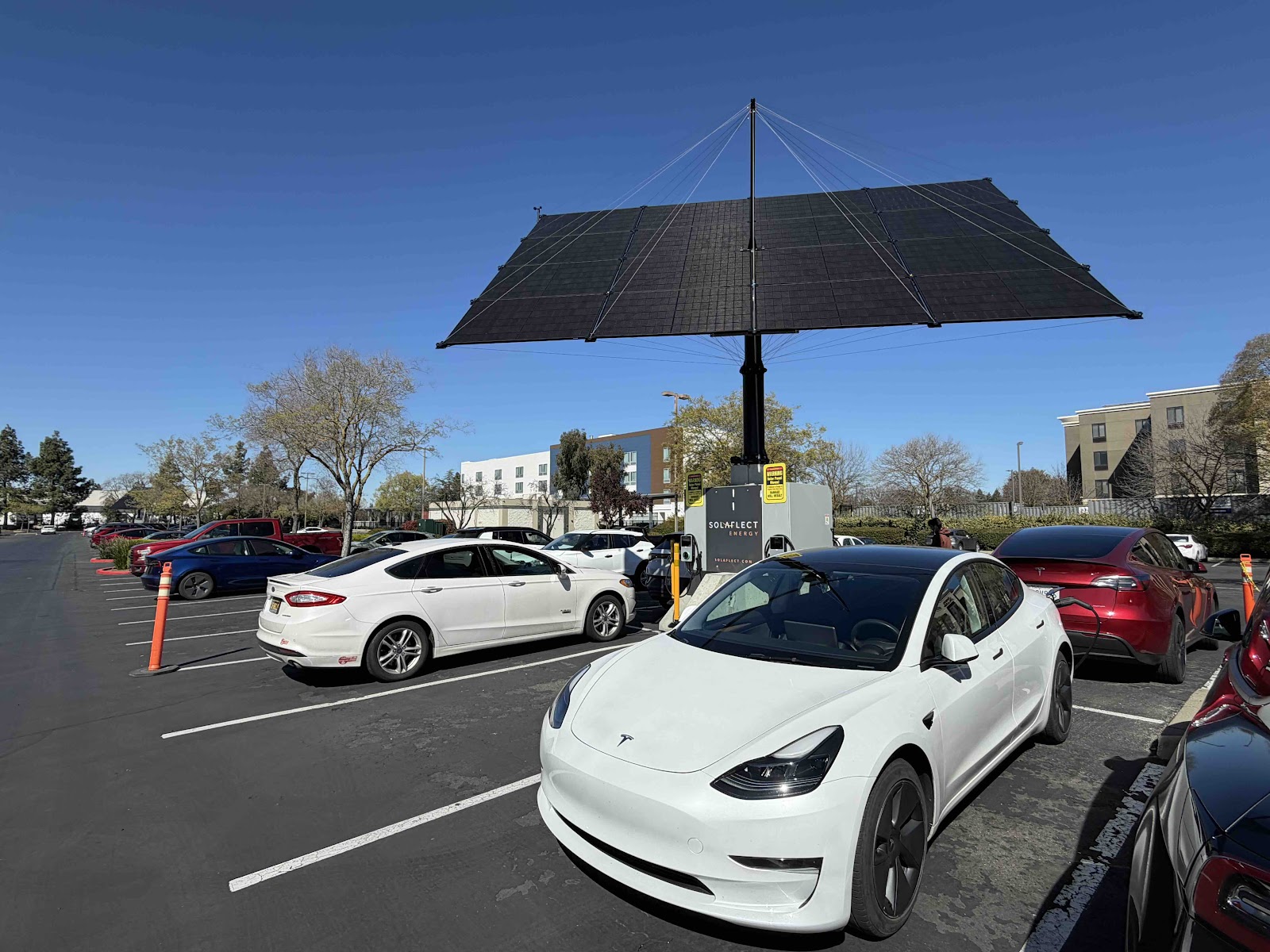
Off-grid solar EV charging takes a different approach. A self-contained solar charging unit generates and stores its own energy, which eliminates the need for a utility connection, utility upgrades, and trenching. Clear Blue Commercial offers a solar EV charging solution and has hands-on experience with off-grid solar charging installations in the Sacramento region.
Off-grid charging is not the right answer for every property. Charging demand, available sun, parking layout, and the speed of charging needed all matter. The point is that owners have more than one option, and comparing them side by side often leads to a better decision. Our guide to grid-connected vs. off-grid commercial EV charging walks through the tradeoffs.
The best charging solution is the one that fits the site, not the one that looks best in a brochure.
How We Approach It
A Practical Path to Commercial EV Charging
Clear Blue Commercial helps Sacramento owners move from interest to installation in a way that protects the budget and the property.
01
Understand the Need
Talk with tenants and review how people and vehicles use the property, so the plan reflects real demand rather than assumptions.
02
Assess the Site
Review electrical capacity, parking layout, distances, and site conditions, and identify whether grid-connected, off-grid, or a combination makes sense.
03
Build the Business Case
Compare installed cost, ongoing operating costs, available SMUD and other incentives, and the value to tenants, then phase the work to fit the budget.
04
Install, Operate, and Plan Ahead
Coordinate vendors and installation around normal operations, set up maintenance and billing, and leave room to expand as demand grows.
Think Long Term
EV Charging Belongs in Your Capital Plan
Charging is most cost-effective when it is coordinated with other work. If a parking lot is due for resurfacing, that is the moment to install conduit for future chargers. If an electrical upgrade is already on the horizon, sizing it with EV charging in mind can avoid a second project later. If a roof replacement or solar project is planned, the timing may affect the charging strategy too.
Future-ready planning does not mean overbuilding. Installing far more capacity than a property needs today rarely makes financial sense. But choosing equipment that can scale, and preparing infrastructure while the ground is already open, can make future expansion far easier and less expensive.
Our article on evaluating electrical capacity before installing EV charging covers that part of the decision in more detail, and Is Your Sacramento Commercial Property Ready for EV Charging? offers a readiness checklist.
Good Times to Plan Charging
Coordinate EV Charging With
- ✓ Parking lot resurfacing or restriping
- ✓ Electrical service or panel upgrades
- ✓ Solar or roof replacement projects
- ✓ Major tenant improvements or new leases
- ✓ Fleet changes announced by a tenant
Owner Questions
Sacramento Commercial EV Charging FAQs
How do I know if my Sacramento commercial property is ready for EV charging?
Start with charging demand, parking layout, available electrical capacity, proposed charger locations, and how much site work installation would require. A site assessment brings those pieces together so you can see which options are practical and what they are likely to cost.
Does SMUD offer incentives for commercial EV charging?
SMUD’s Commercial EV program lists incentives for Level 2 and non-public DC fast charging, as well as support for certain panel and transformer upgrades, with higher amounts for sites in qualifying equity areas. Amounts and requirements change, so confirm current terms with SMUD before you finalize a plan.
What does commercial EV charging cost in Sacramento?
Cost depends on the number and type of chargers, available electrical capacity, utility work, trenching, permitting, accessibility requirements, software, and ongoing maintenance. Comparing the complete installed and operating cost, after incentives, gives a far more accurate picture than equipment price alone.
Is there still a federal tax credit for commercial EV chargers?
The federal Alternative Fuel Vehicle Refueling Property Credit (Section 30C) applied to qualifying property placed in service through June 30, 2026, according to the U.S. Department of Energy’s Alternative Fuels Data Center. Owners should confirm current federal, state, and utility incentives with their tax advisor and program administrators before making investment decisions.
Can EV charging be installed without trenching?
Sometimes. Placing chargers close to existing electrical infrastructure reduces trenching, and off-grid solar EV charging eliminates the utility connection altogether. Whether either approach works depends on the property’s layout, sun exposure, and charging needs.
Will EV charging help with tenant retention?
For many tenants, charging is becoming an expected amenity, particularly for office and professional properties with employees who drive electric vehicles. Its value varies by property, which is why talking with tenants before installing is one of the most useful steps an owner can take.
How does Clear Blue Commercial help with EV charging?
We treat EV charging as part of commercial property management and capital planning. That includes understanding tenant needs, assessing the site, comparing grid-connected and off-grid options, reviewing incentives, coordinating vendors and installation, and planning for operations and future expansion.
Keep Learning
Continue Exploring
More resources for Sacramento-area property owners.
Sacramento Commercial Property Management
Hands-on management that protects property value today and plans for what comes next.
Sustainable Commercial Property Management in Sacramento
Where sustainability, operating costs, and long-term asset performance meet.
Solar EV Charging Solution
Off-grid, solar-powered EV charging that eliminates trenching and utility upgrades.
Commercial EV Charging Infrastructure
How to plan EV charging as part of a long-term property strategy across California.
Grid-Connected vs. Off-Grid EV Charging
A side-by-side look at the two main approaches and when each makes sense.
Is Your Sacramento Property Ready for EV Charging?
A readiness checklist for owners before they choose equipment.
Plan EV Charging Around Your Property
Whether you are fielding tenant requests, preparing for fleet changes, or simply want to understand your options, the first step is knowing what your property can support today.
Clear Blue Commercial’s complimentary Sustainable Property ROI Audit Kit helps owners look at infrastructure, operating costs, and future capital needs together, so EV charging fits a larger plan.